Today, components for your home cockpit grow from it.
Aero Vision Germany was founded by Sören Rohne and Steffen Utz. Two friends with a shared passion for aviation and the desire to turn their simulator hardware into a well-thought-out home cockpit.
What began as a project for their own use developed through technical drawings, countless test prints and some long evenings into a product for other aviation enthusiasts. That the journey would turn out to be more demanding than expected has since become part of the story.
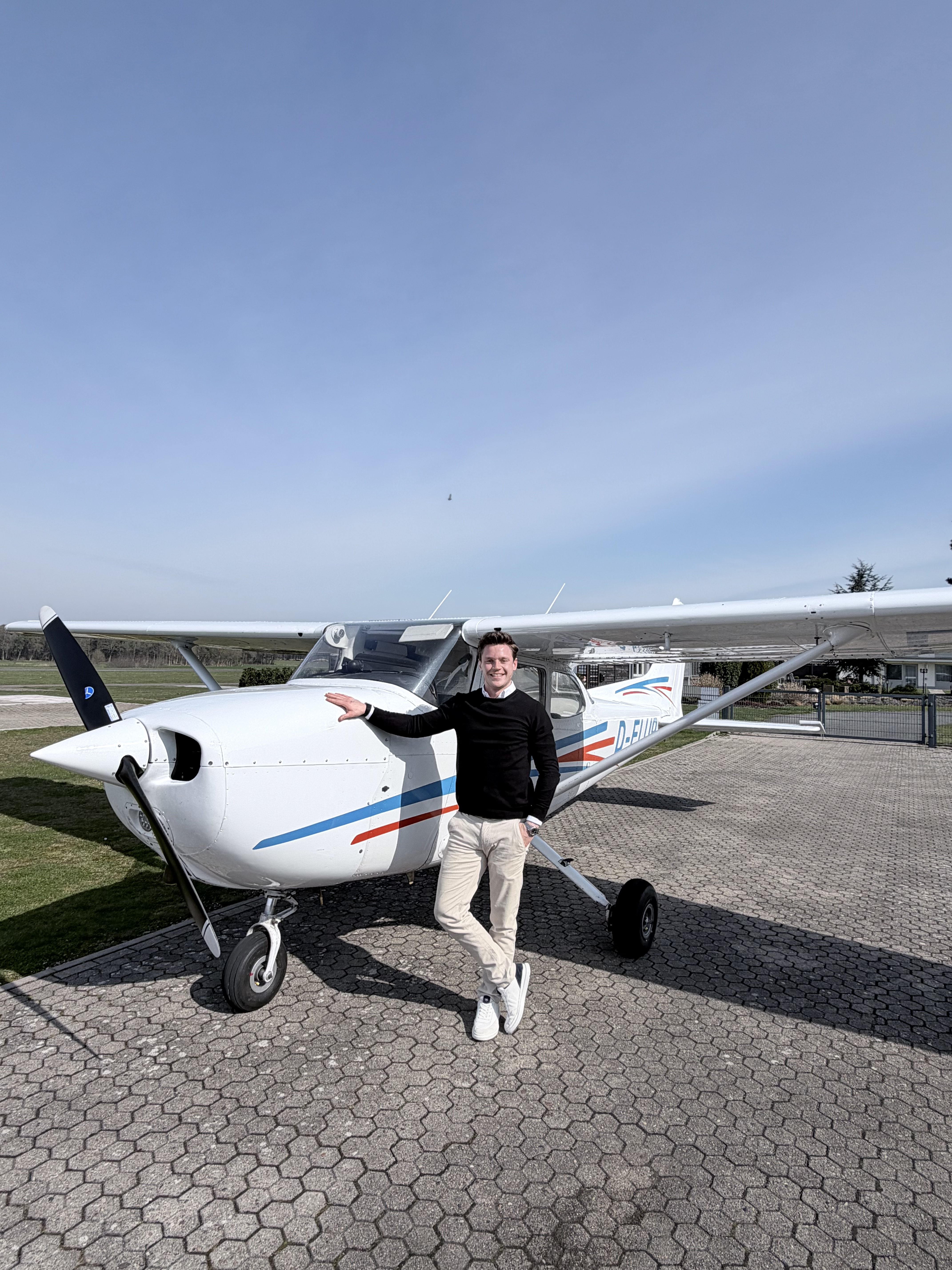
Management · Marketing · Series Development
Sören's passion for aviation started with Microsoft Flight Simulator X. He began his glider training at 14. Today he's a private pilot, works as an instructor in an A320 flight simulator, and is continuing on his path to becoming an airline pilot.
His training as an automotive mechatronics technician, his experience in marketing at Mercedes-Benz, and his studies in Business Administration with a specialisation in Aviation Management combine technical understanding with an eye for design and business management.
At Aero Vision Germany, Sören is responsible for company management, marketing, and the digital presence. Together with Steffen, he is also working on transitioning the prototype into a serial product.
In the team, Sören is the one with an eye for detail. He sometimes works until four in the morning making sure the mouse cursor looks like an aeroplane or that a click on the website sounds like the cabin call on the A320. Small things that take time – and that other aviation enthusiasts will probably smile at.
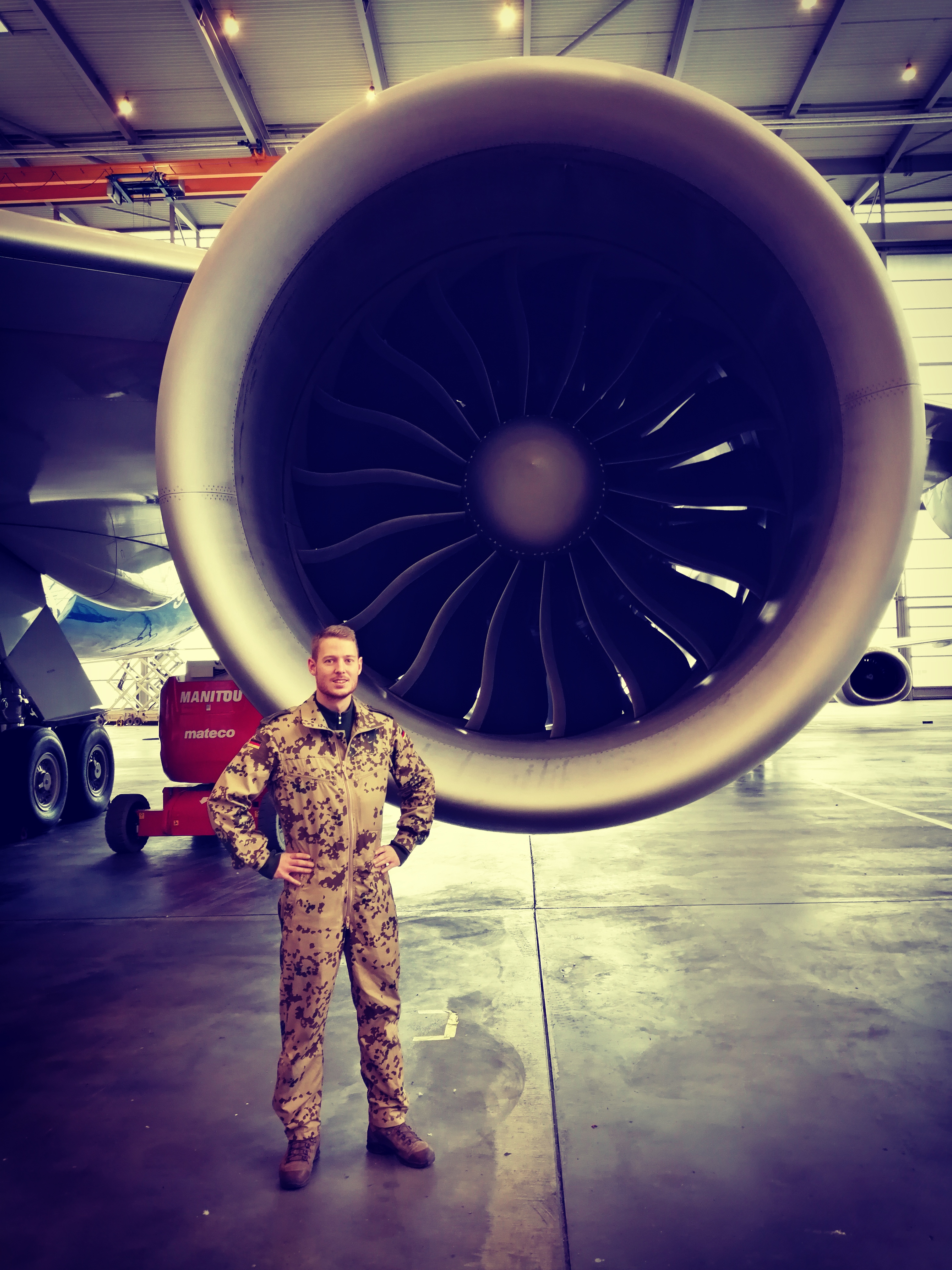
Technical Development · Design · 3D Printing
Steffen brings solid technical knowledge from his training as an aircraft mechanic and his many years of experience in aviation engineering. His focus areas are technical drawings, design, and 3D printing.
On top of that, he brings practical experience with flight simulation and home cockpits. He evaluates a design not only technically, but also by how it will later be assembled and used in the simulator.
At Aero Vision Germany, Steffen gives shape to the shared ideas. Drawings become components, test prints lead to new insights. In close collaboration with Sören, he develops the design further and aligns manufacturing, fixings, and assembly.
The mutual enthusiasm for each other's work is genuine: sometimes Sören shows off a new detail on the website, sometimes Steffen presents the latest 3D print. After a friendly remark, both sides often follow with: "Wie geil, Bro!"
"We were on a shared cockpit flight when the WINCTRL MCDU slid off my desk while I was programming it. We both looked at each other and said: this is rubbish. How cool would it be to have a real home cockpit? Then we looked online at what something like that would cost, and decided: we can just build that ourselves. Spoiler: it wasn't as straightforward as we thought."
— Sören Rohne
At first, it was about building something for themselves and enjoying a shared project. But with every development step, the thought grew that others might want access to the result too.
That changed the task: what had been an individual build for home would need to become a well-thought-out kit that others could also assemble and use.
From that idea, Aero Vision Germany was born.
Sören lives in northern Germany, Steffen in the south. Both develop Aero Vision alongside their jobs and the other demands of everyday life. Standing together in front of a component and pointing to the critical spot is therefore the exception rather than the rule.
The distance requires clear communication. Changes need to be explained clearly, drawings need to be legible, and open questions raised in time. Much of it happens in the evenings and at weekends. Sometimes Sören's working day ends around the time Steffen heads off to the early shift.
Along the way, both have learned how useful good Crew Resource Management can be outside the cockpit too: distribute tasks by strengths, share information, listen carefully, and raise concerns openly.
Their friendship makes the collaboration direct and uncomplicated. Both can get excited about the other's idea and still be honest when they would approach something differently. They occasionally discuss things like an old married couple. In the end, what counts for both is that the shared solution is convincing.
A working build for their own home cockpit was the first milestone. Developing it into a kit for others brought additional requirements.
The pedestal needed to be sturdy, true to the A320, and able to accommodate the intended WINCTRL modules. At the same time, the components had to be matched so that the build could be assembled following clear instructions.
To that end, Sören and Steffen reviewed fixings, standardised components, and reworked individual assembly steps. Technical drawings formed the basis; test prints and practical tests showed where further adjustments were worthwhile.
Their goal is a standardised manufacturing process that maintains a consistent quality standard even at 100 or 500 orders. Design, manufacturing, and assembly are therefore considered and aligned together.
An aeroplane as a mouse cursor, the familiar cabin call on the first click: visitors to the website also encounter small references to aviation.
Behind it is the joy in things that aviation enthusiasts immediately recognise. Sören and Steffen know that feeling themselves – when individual devices come together into a cockpit and familiar actions find their place in your own simulator.
With Aero Vision Germany, they want to make that experience accessible to others: bringing your own hardware together into a coherent home cockpit and experiencing the fascination of the A320 at home.
For Sören and Steffen, flight simulation has been part of their passion for aviation for many years. But they also know that everyone connects something different to it.
For some, the simulator is the first contact with flying. For others, it's a long-standing hobby or the push to actually pursue a pilot's licence. And for people for whom the real cockpit is not accessible for health or other reasons, a home cockpit can be a way to live their dream in their own way.
That is what they want to contribute to with Aero Vision Germany.
It would mean a great deal to them if someone shared a photo of their completed build and described how the first flight felt. Or if a message showed that the enthusiasm for the simulator had given someone the courage to pursue a long-held plan.
Seeing that their work brings joy to others and perhaps even sets something in motion is an essential part of their motivation. That is what they invest their time in – even after work and sometimes until late at night.
With every individual setup, new ideas and use cases emerge. That's why Sören and Steffen welcome the exchange with the people who use their pedestal regularly.
Which details are particularly appreciated? What additions would be interesting for your own cockpit? And what ideas come up after many hours in the simulator?
Such experiences help align future extensions and improvements with the actual needs of users. As in aviation, careful development and continuous learning go hand in hand at Aero Vision Germany.
Whether a photo of the build, impressions from the first flight, or a concrete suggestion: feedback is welcome. Because the enthusiasm that Aero Vision grew from is shared by many – and it's exactly that exchange that makes the project so special to both of them.